
Some Sacred Memory

I learned about Leslie’s death on the way back from a memorial service. It was a very hot Saturday in May, and I had driven to a co-ed prep school in Eastern Massachusetts with my family to memorialize a good friend who had died suddenly and tragically.
In the car-ride home from the service, I checked my phone and found I had a peculiar email. A few days prior, my creative writing professor and mentor, Leslie Epstein, had put me in touch with a friend from his Yale days who was marginally involved with a grant I hoped to get. This man and I had been engaged in a peculiar but delightful string of emails about Allen Ginsberg, the Florida Keys, and Tennessee Williams. On that Saturday in May, though, there was no eccentric banter. In a solemn email, this man told me that Leslie had suffered a stroke and would not survive.
***
Exactly one year prior to Leslie’s death, on May 18th, 2024, I received a call from him at 12:01a.m. I was doing sit-ups when the phone rang.
It was my second time applying to Creative Writing MFA programs, and my hopes were not high. Just like in my first round of applications, rejections from the best schools were trickling in with subject lines like “DEAR APPLICANT” and “WE’RE SORRY.” It was hard not to think, this time around, that the reason I was getting rejection after rejection wasn’t because the system was rigged. It was because I was a bad writer. I was bartending and going to pole dancing classes and getting an essay published every now and then, all (failed) attempts at making my life as a writer feel meaningful. And then I woke up one Saturday morning to a voicemail from Leslie Epstein at Boston University, telling me I was next up on a very short waitlist. I called him back, and he told me they were waiting for one person to get back to them before they could offer me a spot.
“Between us,” he said, “I hope you get it.”
He told me he’d get back to me right after midnight that Monday. I spent the next few days an anxious wreck.
“What if I don’t get in?” I said to my boyfriend.
“I think you’ll get in.”
“What if I do get in and I hate it?”
“It’s just a year!”
“Okay, well, what if I do get in and I go and I love it so much that I become subsumed by the politics of the MFA program and I completely lose the plot and, like, forget why I wanted to be a writer in the first place, and I become so involved in the whole literary magazine, shitty chapbook poetry-readings-in-basements circle jerk that I can’t even see beyond my own hand and I die an old woman who wears colorful glasses and teaches at Kansas State and has never done anything besides publishing in a zine called, like, Crow’s Milk Press?”
“Do you need another Xanax?”
The day came and I tried to keep myself busy. I went to a pole class and ate intestine soup at my favorite Mexican restaurant and watched an Australian reality soap called Byron Baes, and tried not to worry about what would happen if I didn’t get into the program. What would happen if I did. At 11:59 p.m., I was anxiously pacing the living room.
“Do sit-ups,” said my boyfriend. “Get the energy out.”
I was on my twenty-fifth sit-up when my phone rang. I sprang up and answered, out-of-breath.
“Hello, fellow night owl,” said Leslie.
I was in. My God. I was in.
Leslie and I spoke for a bit about logistics: health insurance and the global fellowship at the end of the year and housing. When we hung up, my boyfriend played “For Boston” by The Hold Steady on the Alexa and we danced around the kitchen so exuberantly that our dog started howling.
So, my first impression of Leslie was a good one. While on vacation in Lisbon that summer, I read Leslie’s iconic book, King of the Jews, a darkly comic novel about the Judenrat in a Polish ghetto. It was wonderful and funny and endearing and heartbreaking and honest and everything I wanted my own writing to be. All my fears about Crow’s Milk Press fell to the wayside. I mean, man, this guy could tell a story. I couldn’t believe my luck. The girl who’d gotten rejected from more programs than she had fingers (twice) was now going to Boston to study with a tremendously warm, interesting, genius writer.
Then came the tip sheet.
Leslie’s tip sheet is a famed document in literary circles, a running list of rules for his students. Some are simple (“Avoid ellipses, those three dreamy dots at the end of unfinished thoughts; either finish the thought or interrupt it with a dash”) and some… less so. In Leslie’s tip sheet, gone was the jolly night owl who made sly, politically incorrect jokes and, in his place, an uncompromising man who hated Toni Morrison and loved old Russian writers. He described All the Light We Cannot See as a book which “turned on a plot about a diamond with a flame at the center that casts a curse on all those associated with its possessor. In other words, it is a book written for nine-year-olds--slow nine-year-olds at that.” He presented riddles about writing, and stated, “If you don’t know the answer, think about landscape gardening or becoming a lifeguard at Jones Beach.” “Do not write like Virginia Woolf,” he commanded. “It is important to avoid insofar as possible writing from subjective points of view.” By the end of the tip sheet, I was exhausted with him. He followed it up with a bewilderingly heady summer reading list, complete with Middlemarch and War and Peace. I got as far as the first seventy-four pages of War and Peace, then went back to Cujo. (It was safer there.)
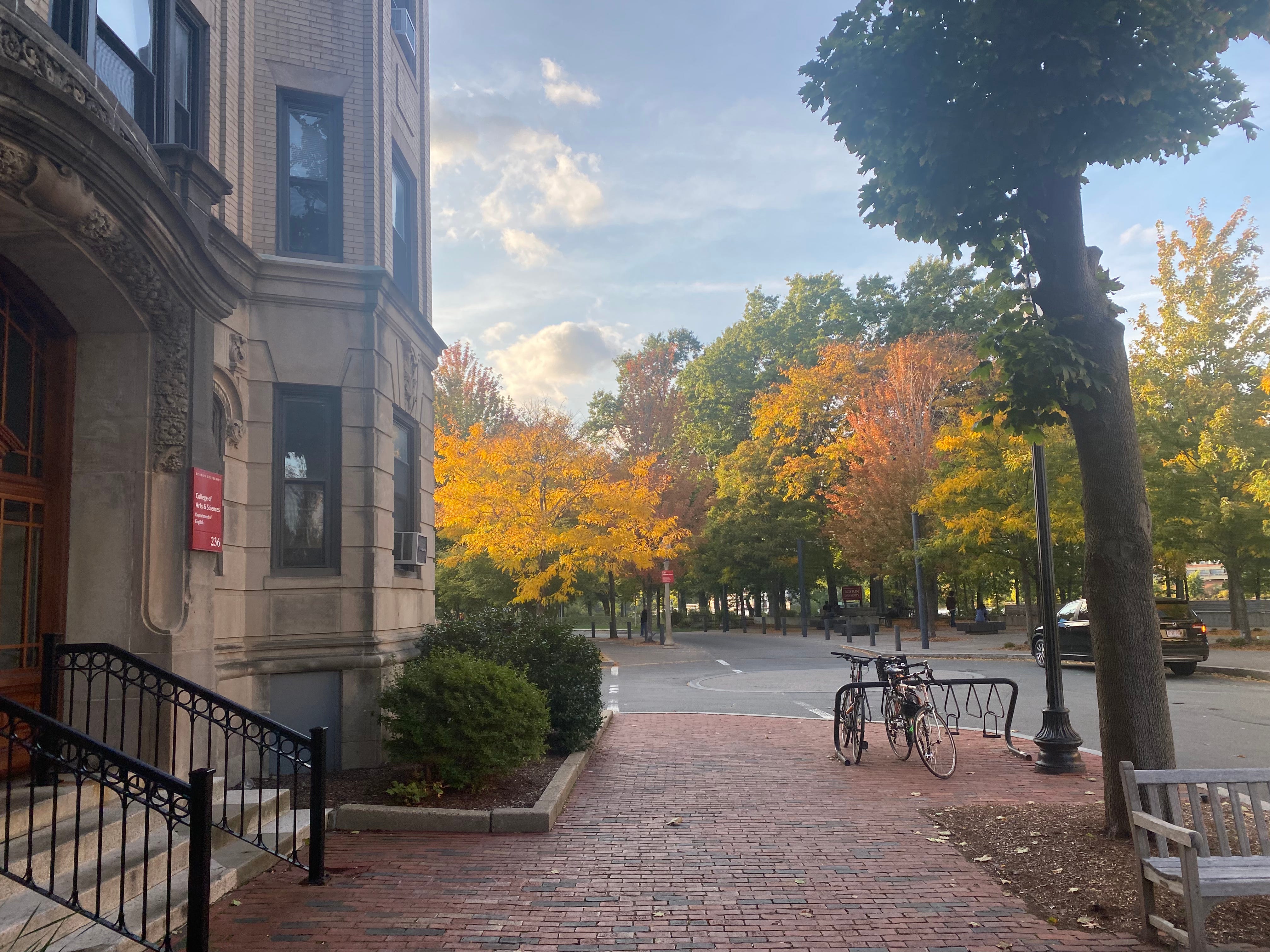
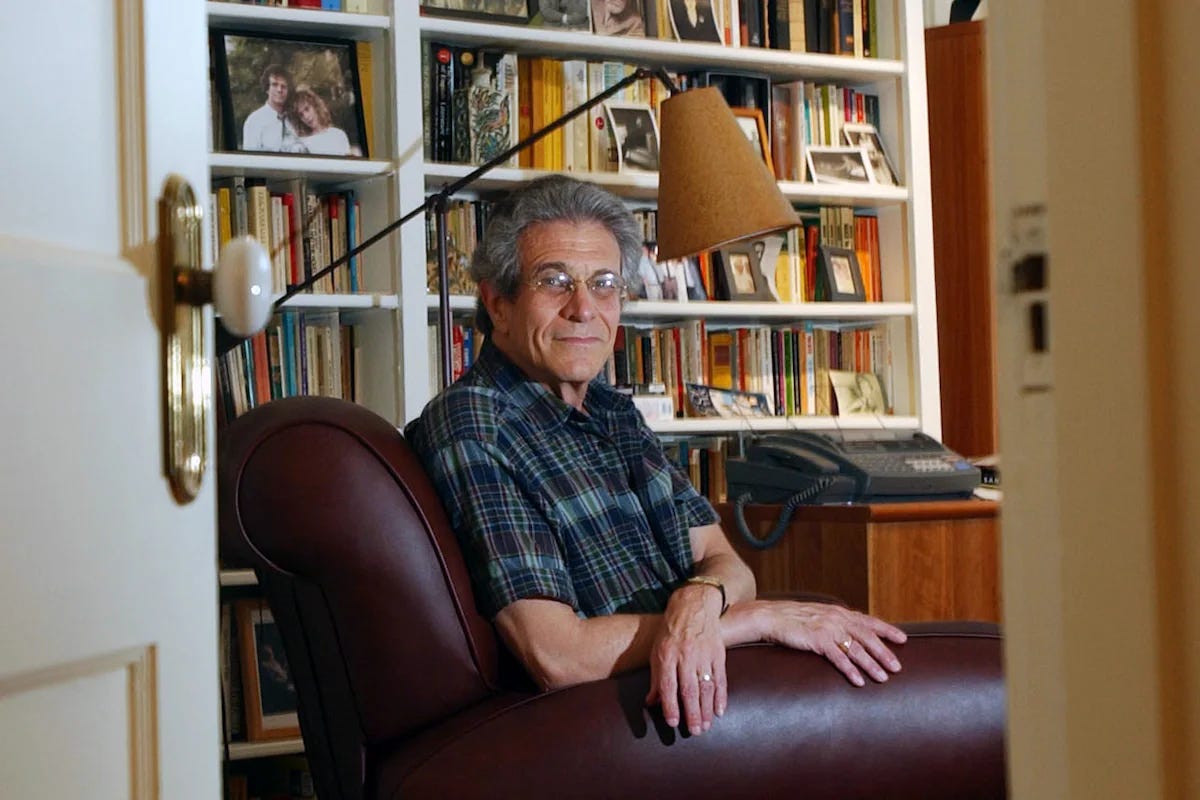
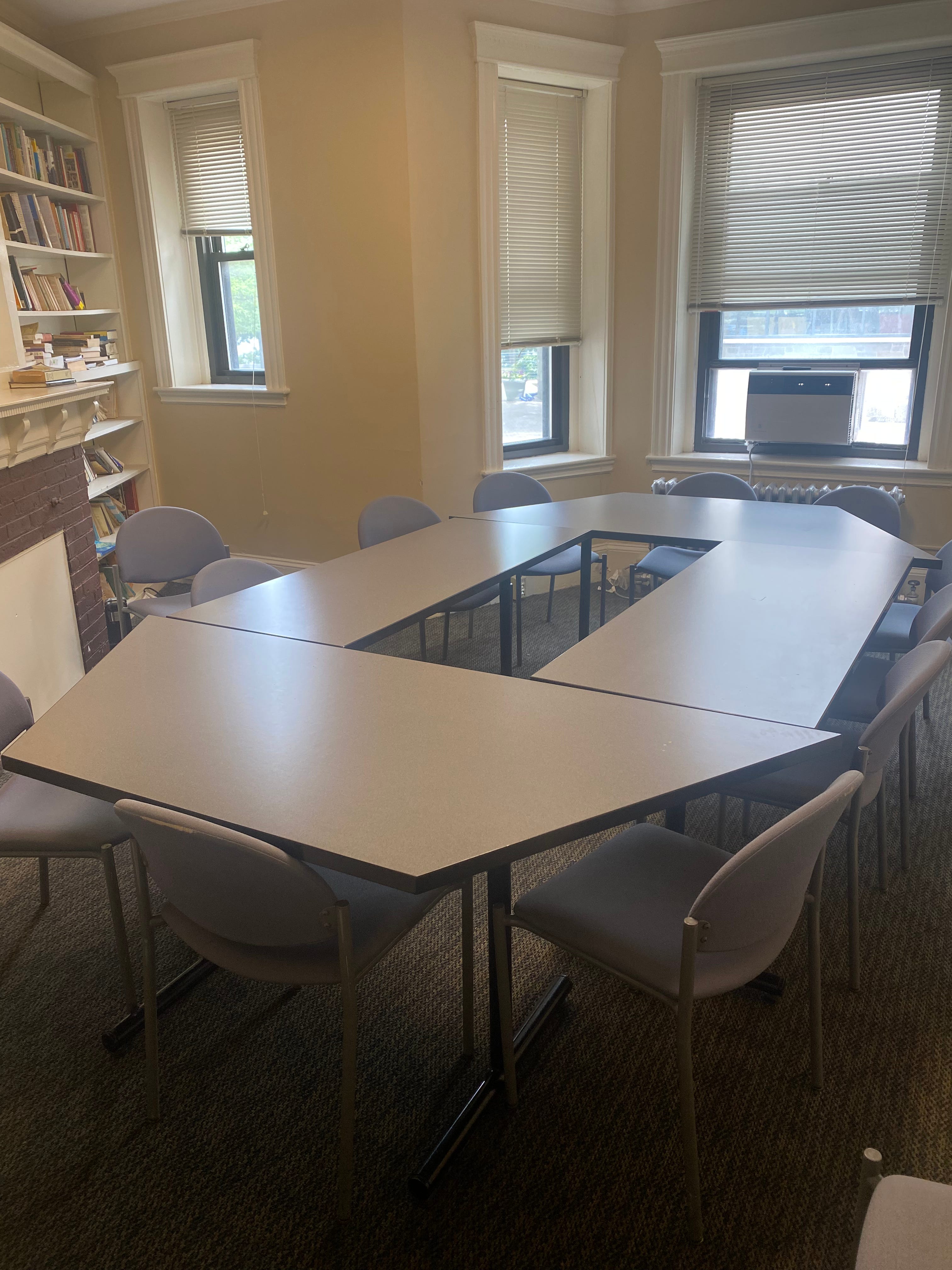
Then it was September, and I was moving in to an apartment in Somerville with a playwright. I met my cohort, a quivering collective of nerves and ambition, for the first time at an awkward teaching orientation, and then we went to the storied English building on Bay State Road, where we gathered in the sweltering first floor classroom and awaited Leslie’s arrival. I could feel the shimmer of anticipation in the room before he had even stepped a foot in. And when he did, there was quiet, at first. He was a short man, shorter than I’d imagined, with a fiercely pronounced jaw, quizzical, dark eyes, fingers covered in rings. He sat and adjusted his scarf, even though it was plenty warm out, and looked around the room at each of us. Then he began.
There was no pomp and circumstance, no grand and sweeping statements.
“What did you think of the tip sheet?” he asked us plainly. “Did it terrify you?”
Some brave students told him they didn’t agree with some of the things he had written. I told him I disagreed with his thoughts on satire (namely, that students should never write it). He was charming and polite, and we all agreed, together, on a common ground. By the end of the class, my fears had melted away. He was tough, yes, but reasonable. And he was fiercely smart. Incredibly engaged. Witty. Funny. Charismatic. He seemed to like all of us. He lit up when I mentioned one of my favorite books, Patrick Melrose (“one of the only great books written this century,” he proclaimed). We headed out of the building together and to a garden party at the program director’s Jamaica Plain house. I recall gazing at the brown ducks teetering along the edge of the Charles River as we waited for our Uber, thinking about what a magical thing this program was going to be.
***
Half a year later, I was crying in the bathroom of The Dugout.
The Dugout was the bar we went to after our Thursday evening workshop. Baseball caricatures on the walls and wine glasses with oily fingerprint smears on them and chicken fingers deep fried to a mummified crisp and a manager who liked to get hammered and serenade us with original songs about suicide.
For workshop that evening, I had turned in a story about a woman who has a miscarriage. Leslie called it “histrionic,” “inartistic,” “hackneyed,” and “nothing but hormonal hijinks.” All of Leslie’s workshops were tough. But I’d never had a workshop like the one that day. It felt like a public shaming. I felt like Cersei in that one episode of Game of Thrones, which I haven’t seen, but I have seen that picture of her walking naked and bald through the town square while people threw mud at her.
There I was, at the bar, trying to order my consolation onion rings, when the bouncer from Southie snapped at me and I broke. I ran to the bathroom and cried over my story and my life and my classmates, who undoubtedly hated me now for writing such a piece of shit. I stared at the crude graffiti on the wall and felt that I had failed. That feeling I’d had during the application cycle came flooding back: I was a failure. I was useless. I was a bad writer. I shouldn’t be a writer. I’d been rejected from so many programs, I’d dangled so low on the waitlist at BU, for a reason. They should never have picked me. They regretted picking me.
I sat in the handicap stall and read listings on my phone for jobs as a dog groomer. I was getting ready to reach out to a woman who needed a private groomer for her “spicy” Norwich Terrier, Thomas Jefferson, when my cohort came in and dragged me back out into the world. That group of nine writers who I had spent fall semester growing with, crying with, brainstorming with, doing pickle shots in narrow hallways with. We would fight over Cormac McCarthy and watch bad shark attack movies on a plastic couch and trade books and bring extra Diet Cokes and plantain chips to class for each other. It was those nine writers who, that night, rescued me.
***
I didn’t know what to do with the news of Leslie’s stroke. I called our program administrator, but it was a Saturday, and she didn’t answer. I paced back and forth. I consulted my parents.
“You don’t know anything yet,” my father advised. “Just wait.”
But waiting felt wrong. Should I give my cohort the information that I had? To withhold this felt horrible. But then, to share such an upsetting email with no concrete information felt even worse. What if Leslie’s friend from Yale was wrong? What if he was misinformed? What if it was a deranged prank? Leslie loved pranks. He once told the Boston Globe that his famous son, Theo, was getting married at Nathan’s Famous Hotdog stand, and they actually ran this as fact.
One of my closest friends in the cohort was spending the weekend at my parents’ Central Massachusetts house with me. She had agreed to look after our dog, Harriet, while we went to our family friend’s memorial.
“You can’t not tell her,” said my dad.
So, I went downstairs and read her the email, and we spent the next forty-eight hours dancing a weird sort of dance, grieving Leslie but not really grieving him, because what if it wasn’t real? Please let it not be real.
Two agonizing days later, our program administrator got back to me with a boilerplate email about a “health event.” She told me she’d give my cohort and me a final update by end of day. As I waited for the update to come in, my phone buzzed. NPR had broken the news before BU had a chance to. Leslie was officially gone.
***
Leslie once got angry with us for not being immediately able to identify a quote from The Brothers Karamazov. In fact, he threatened to end class early because of this, a classic example of his uncompromising, sometimes unreasonable expectations of us. I went back recently and found the quote he was so taken with:
You must know that there is nothing higher and stronger and more wholesome
and good for life in the future than some good memory, especially a memory of
childhood, of home. People talk to you a great deal about your education, but
some good, sacred memory, preserved from childhood, is perhaps the best
education. If a man carries many such memories with him into life, he is safe to
the end of his days, and if one has only one good memory left in one's heart,
even that may sometime be the means of saving us.
I remember covert eye rolls and sighs after he read it to us. This was classic Leslie. The quote, frankly, didn’t seem all that interesting to me at the time. Yes. Good memories are nice. Dostoyevsky could write a sentence. Why were we getting yelled at? We finished class and I didn’t think about it much. The Brothers Karamazov was another heady Russian book on Leslie’s list that I had started and abandoned.
***
After crying at The Dugout, things began to look up for me and Leslie. While other professors acted like I was a cockroach who’d just fallen into their yogurt when I asked them for advice, Leslie championed me and my work tirelessly. He pushed me and prodded me to apply to things, to send out my stories, to believe that I was great. Once, I told him that I had not gotten a grant I had been hoping for. He tracked the director down and sent him a 2 a.m. email beginning with: “You have made a huge mistake.”
The more time I spent with Leslie, the more I got him. He was a curmudgeon, a grump, but beneath that, he was a little boy. He loved crude and childish jokes (anything with a butt or boobs or a middle finger). He also loved Charlie Chaplin and berets. He hated cancel culture, Parasite, unearned sentimentality.
I began to see him as a man who cared about us more than most anything. He loved teaching, loved it so much that he tore down our work in service of making it better. He cared more than any writing professor I’d ever had. He would write pages and pages of single-spaced critiques, sometimes in all caps, sometimes in red, trying to come to grips with and verbalize what he thought of a story. On the page, he’d wrestle, he’d grapple, he’d waffle back and forth, he’d apologize, sometimes, for not having enough to say. “I’m sure you would be happy with praise,” he told me after a well-received story, “but you must demand better. From me, yes, but also from yourself.”
And I do. To think that I ever thought this program was the wrong place for me, that I didn’t belong, that I would get lost in it, is sort of astonishing. Leslie told me that I “sprang forth like Athena from Zeus’s brow,” but the truth is he pushed and shaped me more than he would ever know. He called my story hackneyed because he knew I could do better. For what it’s worth, I agree with him now.
Even writing this essay, I think about his rules: always choose dialogue over interior monologue, avoid sentimentality, never use ellipses, third person is always best, don’t write about wind chimes or old people or midgets (his terminology!). His voice in my head used to be annoying, gnat-like; it used to get in the way, make me doubt myself. Now, it’s an essential part of the writer I am. I can hear it at this moment. He would tell me I’m being sentimental, that this saccharine adoration of him is unearned in the context of this essay. But he would be wrong.
***
My cohort and I went to Leslie’s shiva together. We stood by the dining table and ate tzatziki and brownies and looked at framed pictures of Leslie from twenty years earlier. We laughed with former students, some old and greying, sharing similar versions of the same sentiment: Leslie was terrifying. Leslie was incredible.
A couple of us wandered into a separate room where Leslie’s widow and her twin sister sat. When they figured out who we were, they beckoned us over.
“Gather ‘round,” they said.
In our funeral attire, we sat on the floor, and we listened to the sisters tell stories about Leslie. How he and his wife first met. How he had courted her, tried and failed to play it cool. How her entire life’s mission had been to make him dress better. People stood outside the small room and looked in from the hall.
“They were his last class,” we heard people say. “They were the last ones.”
***
“Some good, sacred memory.”
The final time my cohort saw him, Leslie told us that he was “unusually fond of us” because we are “unusually fond of each other.” My cohort of ten has certainly been, since the beginning of the year, remarkably close. We spent our time in the program going to dingy Boston bars and eating dim sum and getting together for Thanksgiving and Secret Santa and movie nights huddled up on somebody’s couch, watching the obscure French classics Leslie quizzed us on. And we spent much of that time, yes, lamenting over how brutal Leslie could be. That our fondness over each other stemmed, at least in part, from a bonding against his harsh methods, was, I’m sure, not lost on him. We drank disgusting flavored coffee in our shared office, shitty Negroni sbagliatos in dive bars. We ate peanut butter filled pretzels during class and chicken feet in Chinatown and shared cars home from late nights and went to parties; sobbed openly and laughed endlessly and went to an open mic night in Cambridge that ended with us sitting on the rug like kindergarteners, singing a Phoebe Bridgers song in violent discordant attempts at harmony.
Am I being sentimental? Or is it true that Leslie lives on through the good, sacred memory of the pickle shots taken from plastic cups? The tired Ubers home? The Negroni sbagliatos, Campari shining under the bright TV light of the English pub. That night in Cambridge, singing together, flames like little fingers poking over the tops of candles. I think—I’m sure—that he does.
Celeste this is a wonderful reminder for me--you captured him so beautifully. I had many of the same experiences (and he always stood up for me). I miss his intelligence, his demand for excellence, and that wonderful sense of humor in the world with us. Thank you for this!
Beautiful piece on a singular teacher.